
A Properly Balanced Biome
A Clear Pond Starts With Construction
Creating the Perfect Pool or Pond Biome
Mimicking Nature
A properly balanced biome in a naturally filtered pond or pool relies on mimicking natural wetlands. This creates crystal-clear water without chemicals through biological processes involving plants, beneficial bacteria, microbes, and proper circulation. At HD Masonry, we design and build these sustainable systems in Medford, Oregon, and Southern Oregon, blending premium hardscaping with nature for timeless backyard retreats
Key Components for Balance
A thriving naturally filtered pond needs four pillars: nutrient control, oxygenation, biological filtration, and habitat diversity. We create this by focusing on these three aspects.
1. Aquatic Plants – The Foundation of the Biome
Plants absorb excess nutrients (nitrates, phosphates) that fuel algae, produce oxygen, provide shade, and shelter beneficial organisms.
Recommended plant coverage: Aim for 50–70% of the pond’s surface area planted overall. This includes:
- Submerged/oxygenating plants (e.g., anacharis, hornwort) for underwater oxygen and nutrient uptake.
- Floating plants (e.g., water lilies) for surface shade and algae control.
- Marginal/bog plants (e.g., cattails, pickerel rush, iris) around edges and in filters. In natural swimming pools or ponds with fish/heavy bioload, dedicate at least 25–50% to the regeneration zone (often a bog filter) for robust filtration
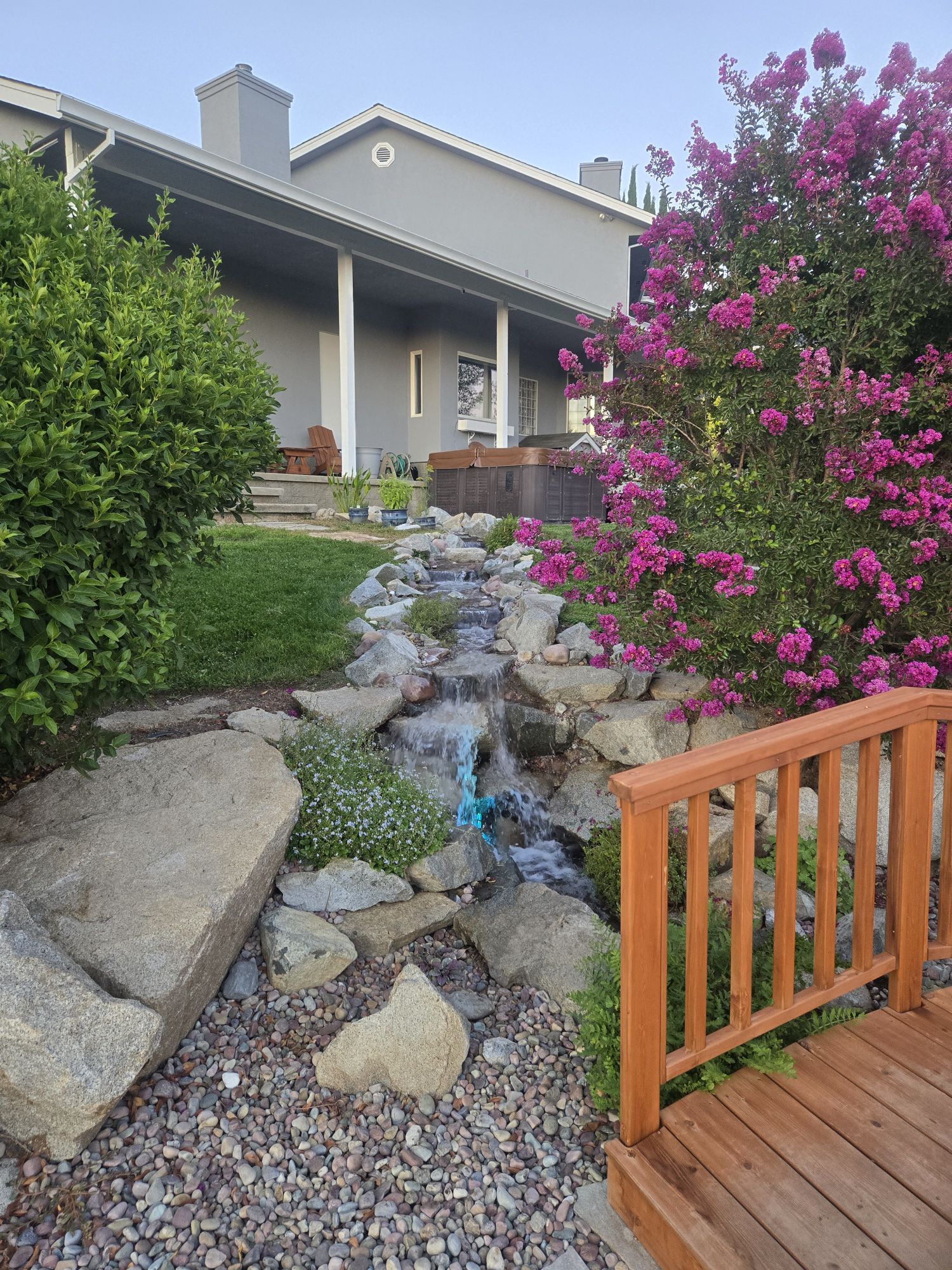


2. Bog Filter – The Natural Powerhouse
A bog filter (wetland filter or gravel bog) is a shallow, gravel-filled area where water is pumped through roots and media for biological cleaning.
What it consists of:
- 8–12 inches of 3/8-inch pea gravel or similar porous substrate (hosts billions of beneficial bacteria).
- Bog/marginal plants densely planted (1 per square foot initially) to uptake nutrients.
- Under-gravel perforated pipe system for even water distribution (up-flow or down-flow design).
- Optional liner and edging for clean integration.
Sizing: 10–30% of the pond’s surface area for most ponds; 25–50%+ for koi, fish-heavy, or swimming ponds to handle higher nutrient loads. Larger bogs provide stronger, low-maintenance filtration. This setup converts fish waste/ammonia into plant food, starving algae while keeping water pristine.
3. Aeration – Essential for Oxygen and Bacteria
Beneficial aerobic bacteria (which break down organics) and fish/plants need dissolved oxygen.
When needed: Always in deeper ponds (>3–4 ft), warm climates like Medford summers, or stocked ponds. Natural waterfalls, streams, or fountains often suffice.
Options:
- Waterfall or stream return from the pump (adds oxygen via splashing).
- Diffusers/bubblers if low flow or deep areas.
- Avoid over-aeration in plant-heavy zones to prevent disrupting the biome. Proper circulation (pump turnover 1–2x pond volume per hour) ensures even oxygen distribution and prevents dead spots.
Tips for Long-Term Success in Southern Oregon
- Start with balanced stocking (if adding fish) and avoid overfeeding.
- Monitor water clarity and test nutrients seasonally.
- Use premium, durable materials (stone, concrete, pavers) for edges and structures to withstand our climate.
- Many clients return for phased additions like carved concrete features or outdoor fireplaces once their pond thrives.
For expert design and installation of a naturally filtered pond, bog filter, or full luxury outdoor living space in Medford, Oregon, contact HD Masonry LLC at hdmasonry.llc today. We build to last with attention to detail—creating your personal backyard paradise that stays balanced and beautiful for years.
Service Areas
HD Masonry serves residential and commercial projects across the Rogue Valley in Southern Oregon
- Medford
- Grants Pass
- Eagle Point
- Merlin
- Gold Hill
- Central Point
- Ashland
- Talent